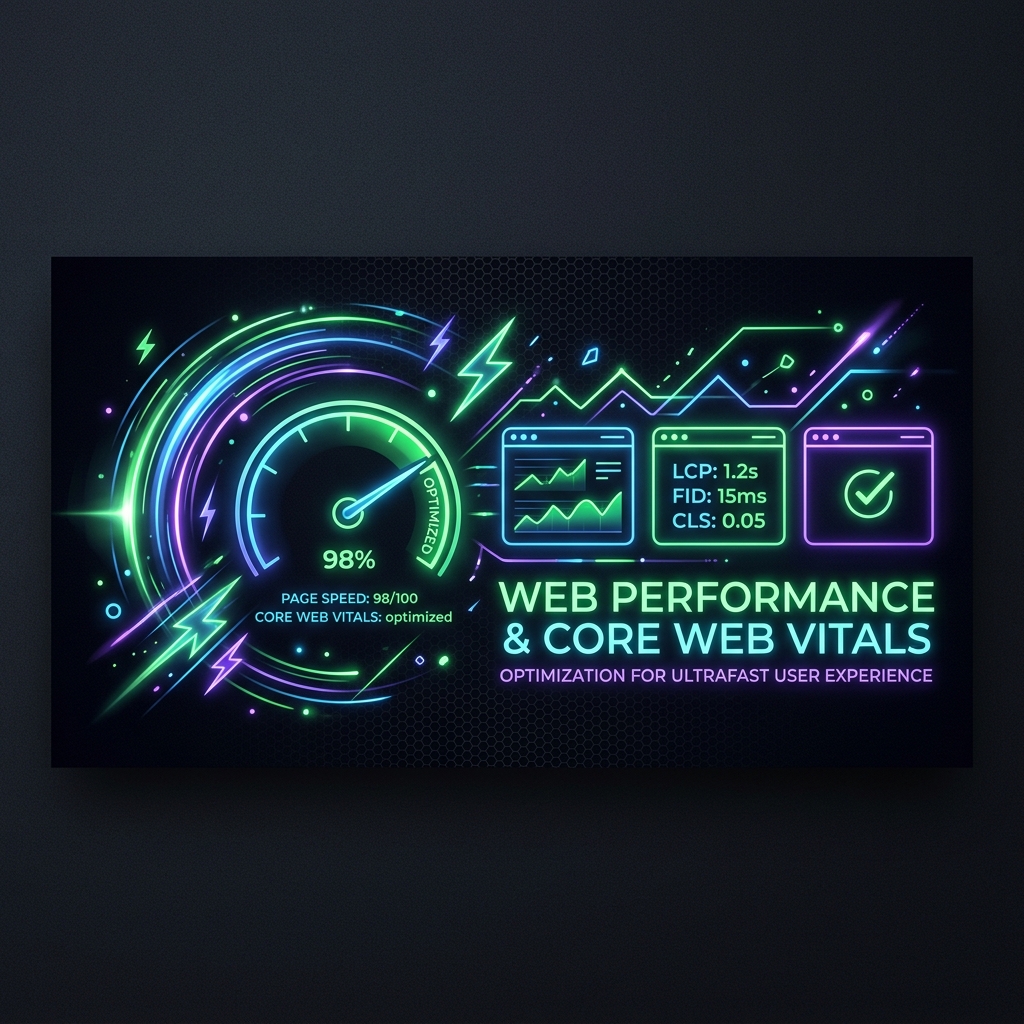
Google's Page Experience update made page speed and UX a key ranking factor. At the center of this evaluation are Core Web Vitals: three performance metrics that quantify the load speed, interactivity, and visual stability of a webpage.
The Three Core Web Vitals
1. Largest Contentful Paint (LCP)
Measures: Loading performance.
LCP tracks how long it takes for the largest visual element on the screen (such as a hero image or main heading) to render. To pass Google's test, your LCP should occur within 2.5 seconds of page load.
2. Interaction to Next Paint (INP)
Measures: Page responsiveness.
INP (which replaced First Input Delay) measures how responsive a page is to user actions like clicks, taps, and keyboard inputs. A good score is under 200 milliseconds.
3. Cumulative Layout Shift (CLS)
Measures: Visual stability.
CLS calculates how much page content shifts unexpectedly during render (e.g., when a slow-loading image pushes down a text block you are reading). To pass, your CLS score should be 0.1 or less.
Technical Fixes to Improve Scores
- For LCP: Compress and optimize images (use WebP/AVIF formats), implement lazy loading, and eliminate render-blocking JavaScript.
- For INP: Optimize script execution times, defer unused JS, and avoid heavy blocking event handlers.
- For CLS: Always specify dimensions (width and height) for images and video elements, and reserve layout space for dynamic ads.
Conclusion
Core Web Vitals align user experience with search engine indexing. By optimizing these performance pillars, you not only improve search engine placement but also lower bounce rates and boost user retention.